What it is
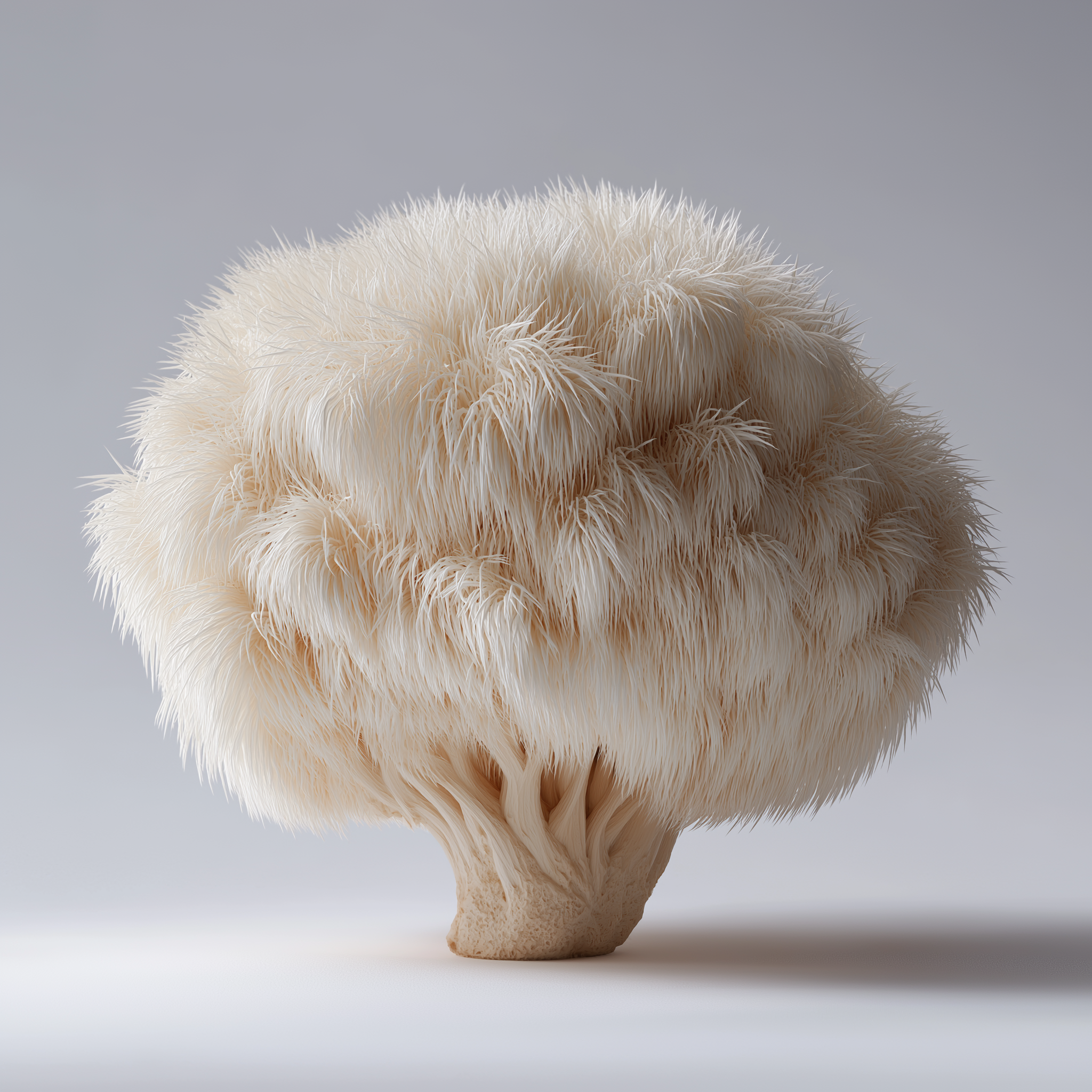
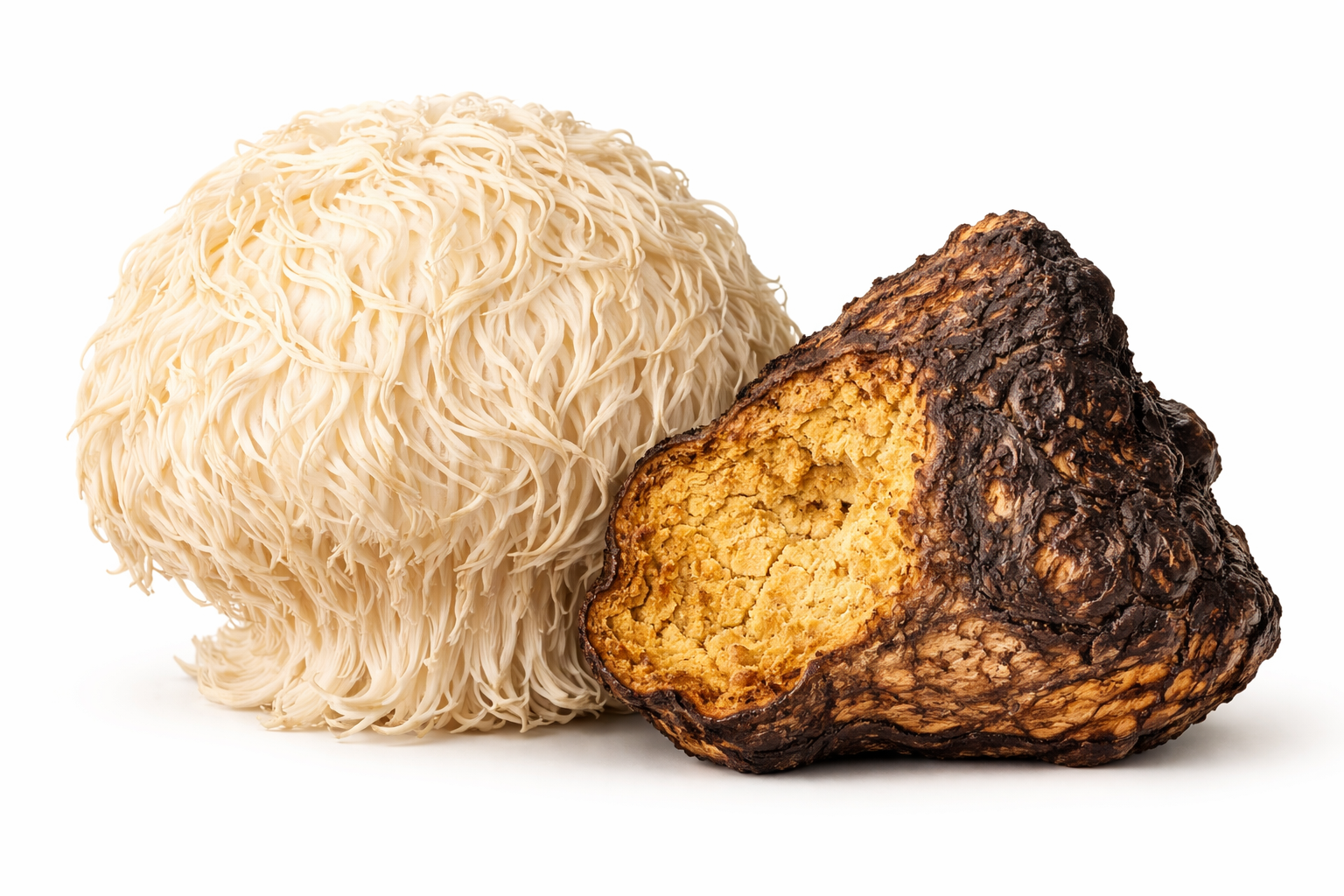
Lion's Mane (Hericium erinaceus) is a large, white mushroom with distinctive cascading tendrils — resembling, as its name suggests, the mane of a lion. It grows on dead or dying hardwood trees across North America, Europe, and Asia, most commonly on oak, beech, and walnut. In the wild it is rarely found; cultivated forms are now widely available.
It has been consumed as a food across East Asia for millennia — prized as much for its delicate, seafood-like flavour as for its medicinal properties. In traditional Chinese medicine it was prescribed for stomach ailments, as a general tonic, and to support mental clarity. Buddhist monks reportedly consumed it as a tea to enhance their capacity for focus during long meditation sessions.
How it was discovered — and by whom
The earliest written records of Lion's Mane date to the Chinese pharmacopeia of the Han Dynasty, around 200 BC. The Shen-nung pen ts'ao ching — the first materia medica in traditional Chinese medicine — references it as a tonic mushroom with restorative properties.
In Japan, it was known as Yamabushitake — "the mushroom of the Yamabushi," itinerant mountain monks who wore robes resembling the mushroom's shaggy appearance. These monks are said to have brewed it into tea to sustain mental endurance during their solitary practices in the mountains.
Modern scientific investigation began in earnest in the late 20th century. In 1991, Japanese researchers first isolated hericenones from the fruiting body — compounds found to stimulate Nerve Growth Factor (NGF) synthesis in laboratory settings. Later, erinacines were identified in the mycelium, with even stronger NGF-stimulating activity and the ability to cross the blood-brain barrier in animal studies.
Why it matters — the NGF pathway
Nerve Growth Factor (NGF) is a protein essential to the growth, maintenance, and survival of neurons in the brain and peripheral nervous system. It plays a critical role in the formation of new neural connections — the biological process underlying learning, memory formation, and cognitive plasticity.
As we age, NGF activity naturally declines. This decline is associated with reduced cognitive performance, slower information processing, and — at its most severe — neurodegenerative conditions including Alzheimer's disease. Lion's Mane is the only known natural source of hericenones and erinacines, compounds that appear to support NGF synthesis from within the body.
Unlike caffeine, which works through adenosine receptor blockade to create alertness, Lion's Mane works on the underlying infrastructure of cognition — not a temporary boost, but gradual, cumulative support for the brain's own mechanisms.
What the research shows
Human clinical research on Lion's Mane is still in early stages, but several published trials have produced notable results. A 2009 double-blind, placebo-controlled trial published in Phytotherapy Research found that adults aged 50–80 with mild cognitive impairment who took 3g/day of Lion's Mane powder for 16 weeks showed significantly improved scores on cognitive function scales compared to placebo — with scores declining again after supplementation stopped, suggesting benefits require consistent use.
A 2023 pilot study in healthy young adults (ages 18–45) found that a single dose of 1.8g Lion's Mane produced faster performance on cognitive reaction tasks at 60 minutes post-dose, with a trend toward reduced subjective stress after 28 days of supplementation.
Research into Lion's Mane's effects on mood, anxiety, and sleep quality is ongoing, with several clinical trials currently in progress. The general picture that emerges is one of a compound that works gently, consistently, and cumulatively — not dramatically, not immediately, but meaningfully over weeks.
First written records
Shen-nung pen ts'ao ching documents Lion's Mane as a restorative tonic mushroom in traditional Chinese medicine.
Yamabushitake
Japanese mountain monks (Yamabushi) adopt Lion's Mane tea as a practice for sustaining mental endurance and focus.
Hericenones isolated
Japanese researchers identify hericenones in Lion's Mane fruiting body — compounds found to stimulate NGF synthesis in vitro.
Erinacines discovered
Erinacines identified in Lion's Mane mycelium — more potent NGF stimulators shown to cross the blood-brain barrier in animal models.
First human RCT
Double-blind trial shows 3g/day Lion's Mane significantly improves cognitive function scores in adults with mild cognitive impairment over 16 weeks.
Healthy adults trial
Pilot study shows acute cognitive benefits in healthy young adults after a single dose; stress reduction trend after 28-day supplementation.